
Weathered, Reconsidered: Sun Damage and the Modern Man

Ask most men about sunscreen and you will hear about the one time they wore it at the beach. Yet the sun is with them every day: on the golf course, at the lake, on the drive to work with light pouring through the driver's side window. Over years, it shows up as brown spots, redness, rough texture and a weathered look that reads as older than they feel. This November, as men's health takes the spotlight, it is worth taking a closer look at your skin.
Men and the Sun: What the Numbers Show
Men are less likely than women to protect their skin. The American Academy of Dermatology notes that women apply sunscreen more often than men, and that men are less likely to protect their skin from the sun.
The consequences go beyond appearance. According to the AAD, men are more likely than women to develop melanoma by age 50, twice as likely by age 65, and three times as likely by age 80. The AAD also estimates that melanoma will affect 1 in 28 men in their lifetime.
Signs of Sun Damage on Men's Skin
Brown spots on the face, scalp, hands and forearms
Persistent redness and visible broken capillaries
Rough or leathery texture
Deepened lines around the eyes and forehead
First, a Skin Check
Before any cosmetic treatment, make sure every spot has been looked at properly. The AAD encourages men to examine their own skin regularly and to get screened for skin cancer, especially if they never have been. See a board-certified dermatologist for any spot that is new, changing, bleeding or simply different from the rest.
Aesthetic treatments address visible sun damage. They are not a substitute for a skin cancer screening.
Sun Damage Treatment in McKinney: How It Works
Once your skin has been checked, the visible effects of sun exposure respond well to modern treatment. Elite Derma offers:
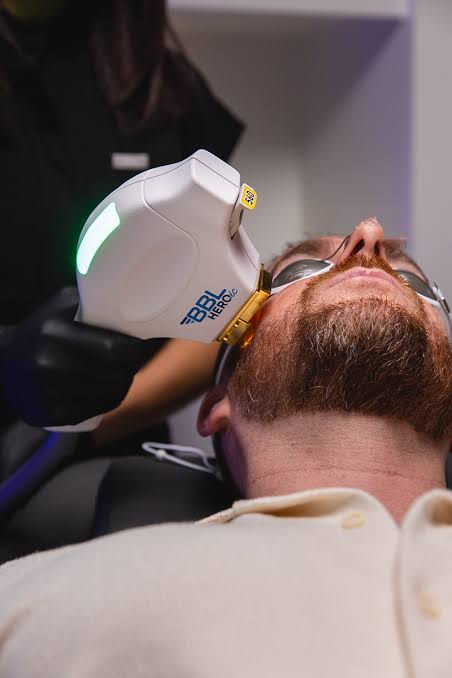
Sun damage and redness treatment: light-based treatment that lifts brown spots, broken capillaries and background flush over a short series
Skin resurfacing: smooths tone and fine lines with a few days of flaking rather than weeks of recovery
Chemical peels: resurfacing at the depth your skin can tolerate
Fall and winter are the ideal season to start, because treated skin needs protection from strong sun while it heals.
The Elite Derma Approach
At Elite Derma Med Spa, every treatment begins with a consultation with a licensed provider, who assesses your skin, your history and your goals, and tells you plainly what will help. Appointments are efficient and discreet, designed to fit around work. Many men pair sun damage treatment with laser hair removal along the neckline or a medical-grade skincare routine, all found on our treatments page.
Serving Men Across Collin County
We welcome men from McKinney, Allen, Frisco, Prosper, Plano, Fairview, Melissa, Anna and Princeton who want skin that looks as healthy as they feel.
Frequently Asked Questions
Can sun damage on men's skin be reversed?
Many visible signs of sun damage, such as brown spots, redness and rough texture, can be improved with light-based treatments, resurfacing and chemical peels. Daily sunscreen helps protect the result.
Should I get a skin check before treating sun spots?
Yes. Any spot that is new, changing, bleeding or unusual should be examined by a board-certified dermatologist before cosmetic treatment. The AAD encourages regular self-exams and skin cancer screenings for men.
When is the best time to treat sun damage?
Fall and winter are ideal, because treated skin needs protection from strong sun while it heals and there is less sun exposure in the cooler months.
Start With a Closer Look
This November, give your skin the same attention you give the rest of your health. Elite Derma members receive our best pricing, and Cherry payment plans make it simple to spread the cost of a series. Book your consultation at Elite Derma Med Spa in McKinney.
Sources
Individual results vary. This content is for educational purposes and is not medical advice.


Comments